Bakersfield Sound
Dust Bowl honky-tonk cut loud and live: Telecasters, pedal steel, no strings, no Nashville polish.
What you're really asking
You're asking about a sound, but it started as a labour market. Oil and cotton pulled Oklahoma and Texas families into the southern San Joaquin Valley in the 1930s, and the beer joints they filled needed music loud enough to cut through a Friday crowd.
The answer was electric: Fender Telecaster, pedal steel, snare on top, two voices tight in harmony, recorded dry so the band sounds like the band.
Where it sits
Bakersfield, California, roughly 1951 to 1972. Bill Woods ran the house band at the Blackboard Café; Trout's and the Lucky Spot in Oildale kept the same players working six nights a week.
Cousin Herb Henson's Trading Post on KERO-TV, from 1953, put those players on screen daily and fed Capitol Records a talent pipeline. Capitol A&R man Ken Nelson produced nearly all of it in Hollywood — Jean Shepard, Tommy Collins, Buck Owens, Wynn Stewart, Merle Haggard — and crucially let the artists use their own road bands instead of session men.
Fuzzy Owen and Lewis Talley's tiny Tally label cut Haggard's first sides before Capitol bought his contract in 1965. By 1969 Owens was on network TV with <em>Hee Haw</em>, and the sound became a template: Gram Parsons, the Byrds, later Dwight Yoakam.
The scene
Who: Buck Owens and Don Rich (the harmony and the Telecaster), Merle Haggard with Roy Nichols and Ralph Mooney, Wynn Stewart, Jean Shepard, Tommy Collins, Bonnie Owens, Red Simpson.
Places: the Blackboard, Trout's, the Beardsley Ballroom, Capitol Studio A in Hollywood. What: two electric guitars, pedal steel, upright or electric bass, drums kept forward, vocals doubled in high tenor harmony.
No string sections, no vocal choruses, minimal reverb. How it works: it has to sound like a working band playing in a room, and the song has to survive being sung over a bar argument.
The leading records
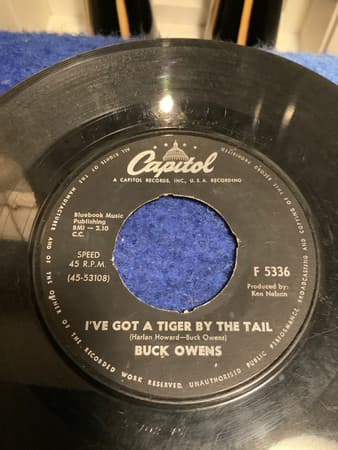
Buck Owens
I've Got a Tiger by the Tail
1965
Don Rich's Telecaster doubling the vocal line — the template every Bakersfield single copied after.
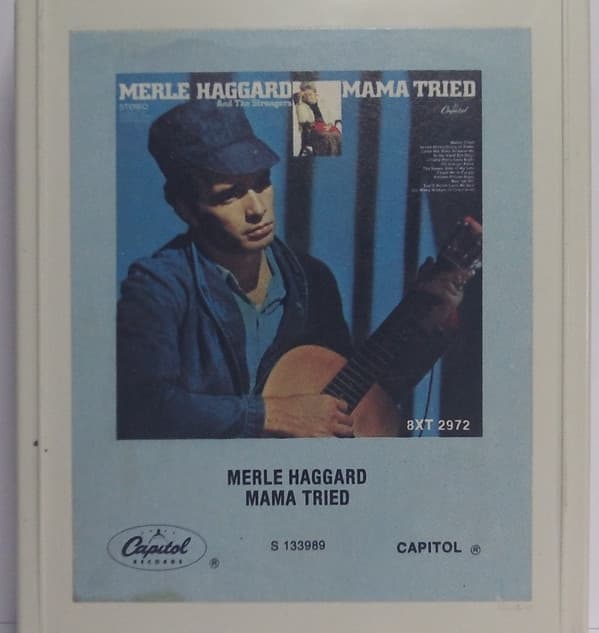
Merle Haggard
Mama Tried
1968
Written after a Johnny Cash show at San Quentin, where Haggard was in the audience serving time.
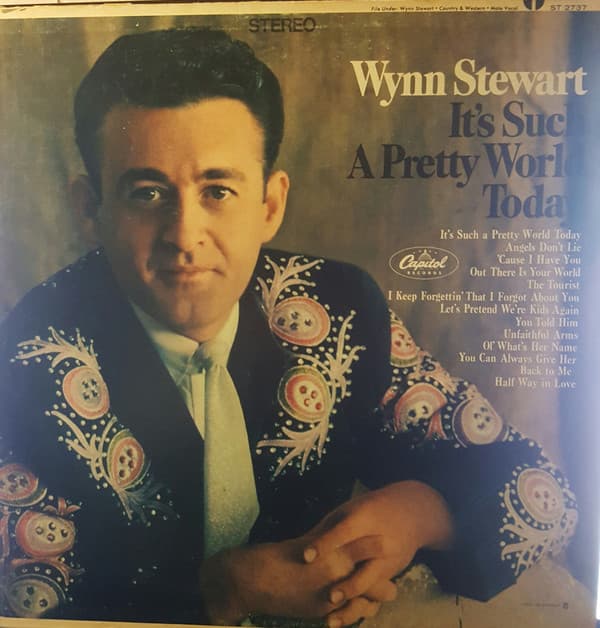
Wynn Stewart
It's Such a Pretty World Today
1967
Capitol, produced by Ken Nelson; the title track hit number one that year. Stewart's Las Vegas club gave Haggard his first steady bass gig.
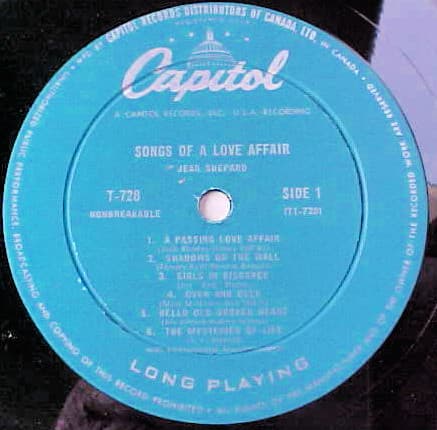
Jean Shepard
Songs of a Love Affair
1956
Twelve songs on one affair, told from the wife's side — cited as among country's first concept albums and among the first by a woman.
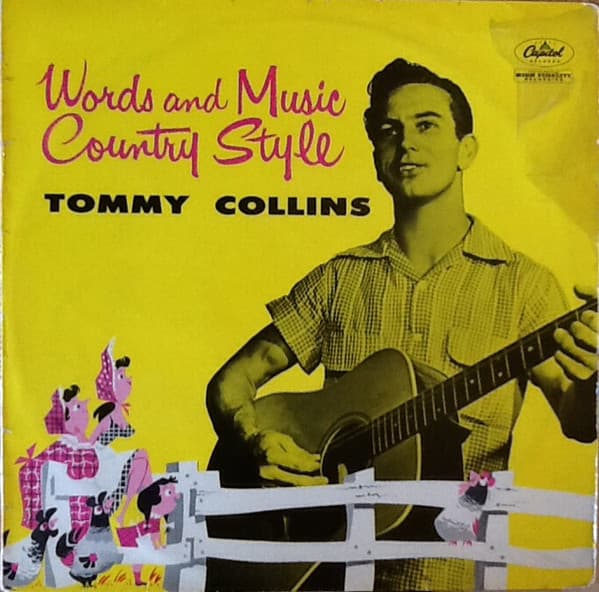
Tommy Collins
Words and Music Country Style
1957
The comic honky-tonk end of the scene; a young Buck Owens played lead guitar on Collins' Capitol sessions.
Buck Owens and His Buckaroos
Carnegie Hall Concert
1966
A bar band recorded in a concert hall at full road tempo — the live proof the records weren't studio tricks.
Oddballs
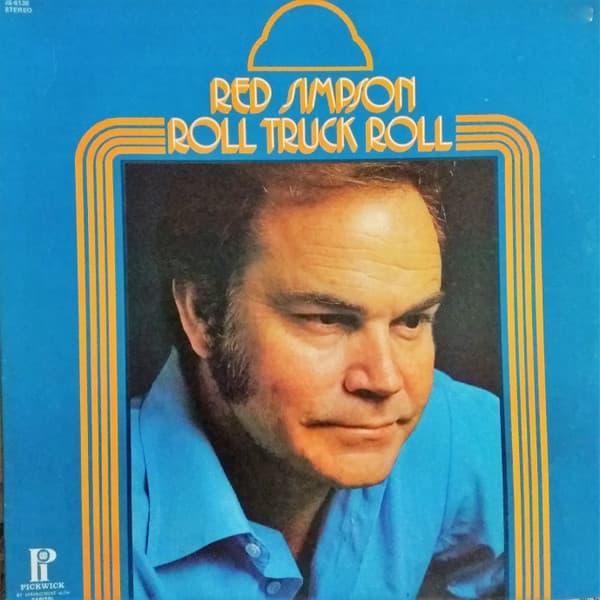
Red Simpson
Roll, Truck, Roll
1966
Bakersfield's spin-off genre: Highway 99 trucker songs, written by a man who played the Blackboard circuit for years.
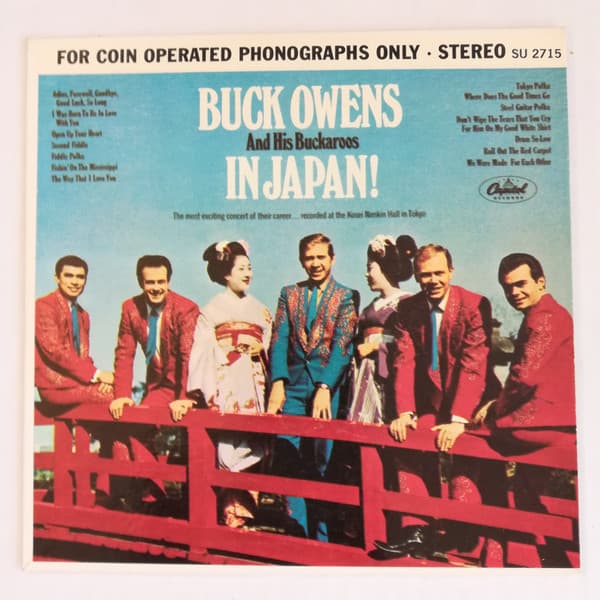
Buck Owens and His Buckaroos
Buck Owens and His Buckaroos in Japan!
1967
Live in Tokyo, pressed for the Japanese market — a Bakersfield record that circulates mainly as an import.
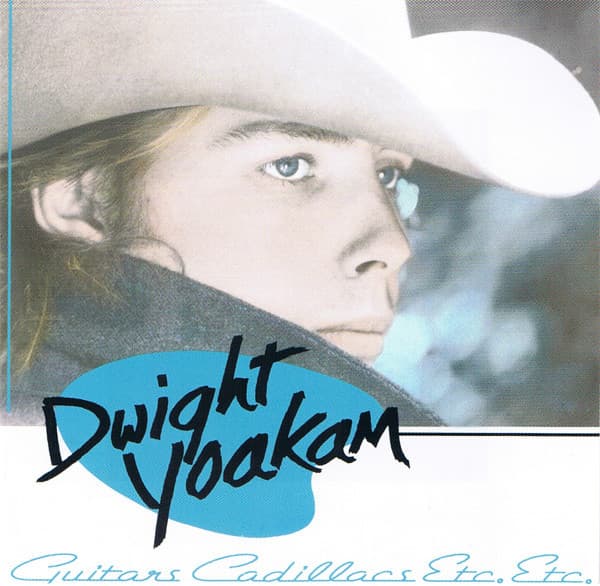
Dwight Yoakam
Guitars, Cadillacs, Etc., Etc.
1986
LA cowpunk clubs, not Nashville, restarted the sound — and pulled Owens out of retirement two years later.
Keep digging
- What did Ken Nelson actually change in the studio?
- Which Tally Records singles are still findable?
- How did Bakersfield feed into country rock?