Bronx Hip-Hop
Breakbeats cut from other people's records, into the first rap LPs, into the sampler era that followed.
What you're really asking
You're asking about a borough, not a genre — because for about fifteen years the Bronx was where the technique got invented and everyone else copied it. It starts as a DJ practice: find the four bars of a funk record where the band drops out, buy two copies, loop it by hand.
The records come later, and most of them are documents of something that already worked in a park.
Where it sits
August 11, 1973: Cindy Campbell throws a back-to-school party in the rec room at 1520 Sedgwick Avenue, her brother Clive — Kool Herc — plays. He isolates the drum break and runs it between two turntables.
Afrika Bambaataa, ex-Black Spade from the Bronx River Houses, builds the Universal Zulu Nation around it and plays anything with a break — Kraftwerk, rock, Munich disco. Grandmaster Flash, trained in electronics, works out cueing and the quick mix; Grand Wizzard Theodore reportedly stumbles onto the scratch.
Vinyl arrives from outside: Sylvia Robinson's Sugar Hill in Englewood, New Jersey, then Bobby Robinson's Enjoy out of Harlem, then Tom Silverman's Tommy Boy in Manhattan. By 1986–88 the Bronx is making albums instead of park tapes, and the SP-1200 replaces the second copy of the break.
The scene
Who: Herc at Cedar Park and the Hevalo, Bambaataa at Bronx River Community Center, Flash and the Furious Five, the Cold Crush Brothers, later KRS-One and Scott La Rock out of a Franklin Avenue men's shelter, and Ced-Gee's Ultra-Lab.
What: the break as the whole point — drums forward, bass loud, MCs working crowd control before they work verses. How a record gets in: it has a usable four bars.
Nobody cared about the genre on the label. Melvin Bliss's "Synthetic Substitution" drum break entered rap through Ultramagnetic's "Ego Trippin'" and became one of the most sampled records there is.
The leading records
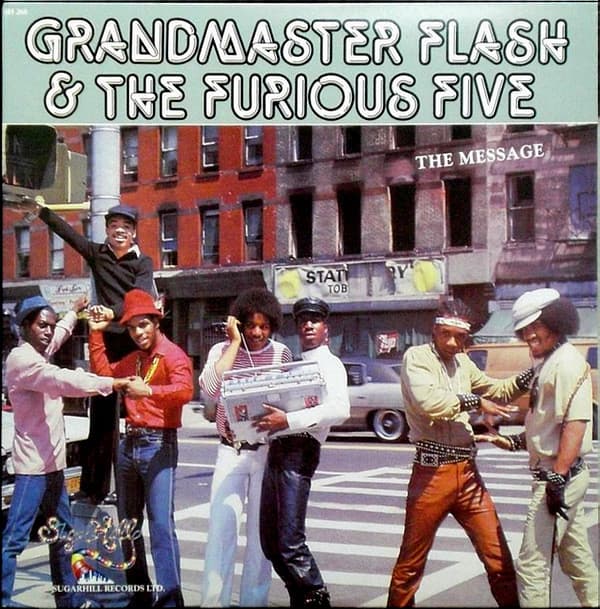
Grandmaster Flash & The Furious Five
The Message
1982
Sugar Hill LP whose title track was largely Duke Bootee's house-band demo — Melle Mel was the only Furious Five member on it.
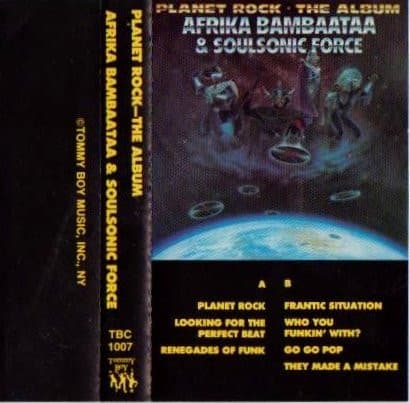
Afrika Bambaataa & Soulsonic Force
Planet Rock – The Album
1986
Tommy Boy LP assembling the 1982–84 singles plus a remix and three new cuts; Kraftwerk's members ended up in the songwriting credits.
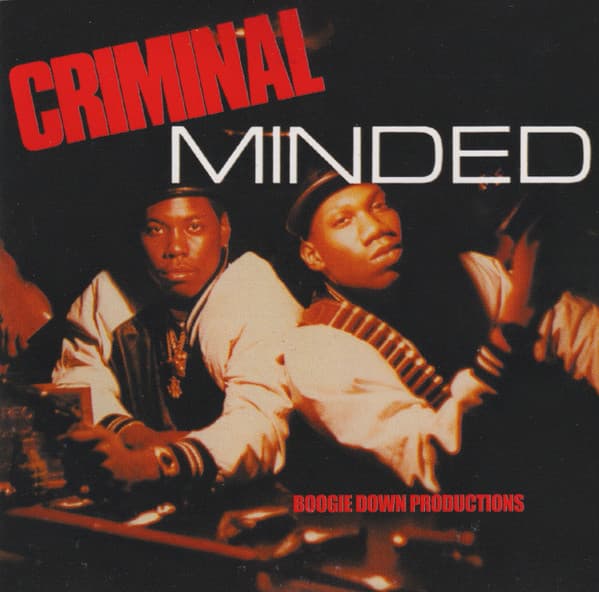
Boogie Down Productions
Criminal Minded
1987
B-Boy Records answer to Queensbridge in the Bridge Wars; Scott La Rock was shot dead months after it came out.
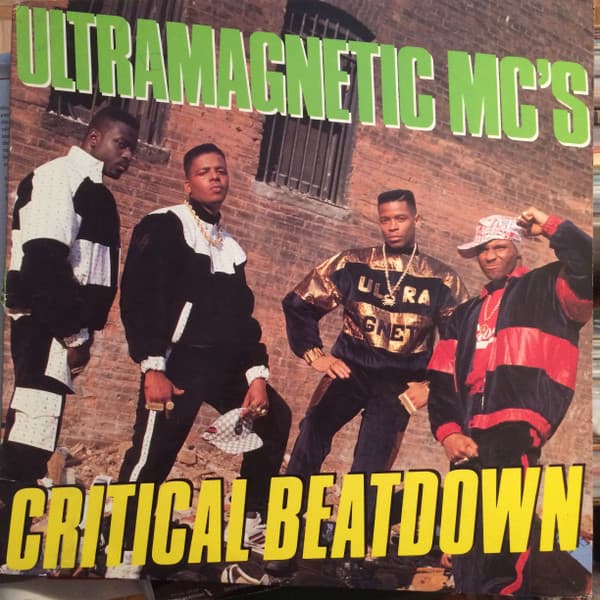
Ultramagnetic MC's
Critical Beatdown
1988
Next Plateau, October 1988, built by Ced-Gee on an E-mu SP-1200 — the Bronx switching from turntables to chopped samples.