Detroit Techno
Drum machines built into science fiction: Black futurism from a collapsing motor city, made for the floor.
What you're really asking
You're asking about a sound, but it started as a posture: suburban Black kids in Belleville treating European synth records as instruction manuals rather than imports. The music is machine funk — 909s and cheap Japanese synths playing chords that belong on a Motown ballad.
The city it came from was emptying out, and the records point forward, off-planet, out of the frame.
Where it sits
Belleville, Michigan, early 1980s. Juan Atkins, Derrick May and Kevin Saunderson traded Kraftwerk, Parliament and Italo heard on Charles "The Electrifying Mojo" Johnson's radio show.
Atkins and Rick Davis cut "Alleys Of Your Mind" as Cybotron in 1981, then "Clear" in 1983. Atkins founded Metroplex in 1985, May's Transmat followed in 1986, Saunderson's KMS alongside.
Neil Rushton, the UK DJ and Network Records founder, assembled the 1988 Virgin compilation that fixed the word "techno" to the city. The Music Institute on Broadway ran 1988–89, dry bar, no alcohol, all floor.
Jeff Mills and Mad Mike Banks launched Underground Resistance in 1989; Submerge distribution came in 1992. Carl Craig's Planet E, Drexciya, Robert Hood's Axis followed.
From 2000, Movement at Hart Plaza.
The scene
Who: the Belleville three, then Mills, Banks, Hood, Craig, Suburban Knight, Drexciya, Blake Baxter, Eddie Fowlkes. Places: Metroplex and Transmat studios, the Music Institute, Submerge's building on East Grand Boulevard.
What: 120–135 bpm, Roland 808/909 and TR-707, Juno and SH-101 chords, strings that lean sad against stiff machine rhythm. Little sampling early on, few vocals, most tracks mixed in single-room home studios.
How a record gets in: it has to imply somewhere else — space, water, a future city. Function first, titles that read like transmissions, labels that sometimes hid the maker entirely.
The leading records
Model 500
Deep Space
1995
Atkins' Model 500 album for R&S — cut at Love Park Studios in Berlin with Moritz von Oswald engineering, with track codes taken from Michigan highway numbers.
Rhythim Is Rhythim
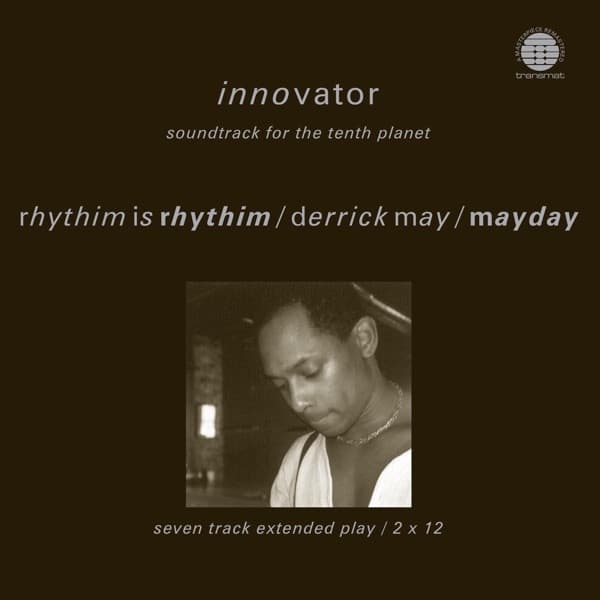
Innovator - Soundtrack For The Tenth Planet
1991
Compiled by Neil Rushton for Network; gathers "Strings Of Life", "Nude Photo" and "The Dance" — May's whole output in one place, and he stopped making records after.
Inner City
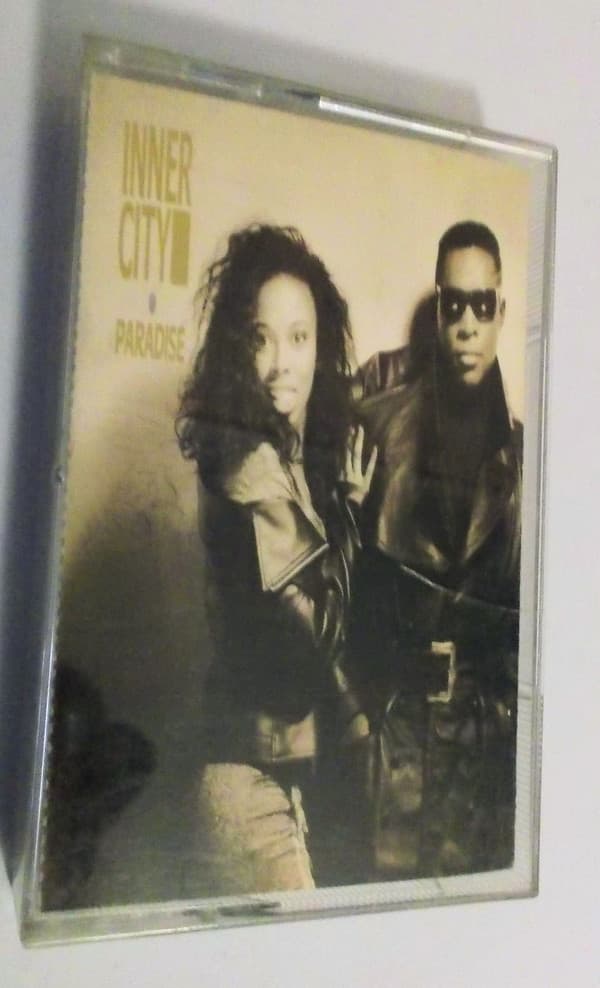
Paradise
1989
Saunderson with Chicago singer Paris Grey — "Big Fun" and "Good Life" took Detroit machines into the UK Top 10 and made techno a pop proposition.
Underground Resistance
Interstellar Fugitives
1998
A collective album, not a solo one: Mad Mike's roster under aliases, sleeve notes framing the music as resistance rather than product.