Leeds Goth & Post-Punk
Northern cities, drum machines, guitars soaked in flange — the sound Leeds built between the art school and the Phono.
What you're really asking
Two scenes sharing one city and often the same stages. First the Leeds University/Polytechnic art-school wing — funk-literate, argumentative, politically explicit.
Then the black-clad second wave that followed it: drum machines instead of drummers, bass up front, guitar turned into weather.
Where it sits
Leeds, roughly 1977 to 1988. Gang of Four formed out of Leeds University's fine art department; Entertainment!
landed on EMI in 1979, the same stretch that produced the Mekons on Fast Product and Delta 5 on Rough Trade. John Keenan's F Club and his Futurama festival at the Queens Hall gave the city a stage.
The second wave ran through Le Phonographique in the Merrion Centre and the Warehouse on Somers Street. Andrew Eldritch founded Merciful Release in 1980 and put out the March Violets' first two singles before a schism with Eldritch led the Violets to start their own Rebirth label.
York's Red Rhino, distributed through the Cartel, carried Red Lorry Yellow Lorry. By 1985 the Sisters had charted on WEA money and the city's template — reverb, machine pulse, low vocal — had gone national.
The scene
Who: Eldritch, Gary Marx, Craig Adams and Wayne Hussey; Chris Reed and Dave Wolfenden in the Lorries; Simon Denbigh and Rosie Garland in the Violets; Jon King and Andy Gill before them.
The Phono's DJ booth, Jumbo Records, the Warehouse. What: percussion came from a drum machine — a feature shared with many of the bands in the Leeds scene at the time.
Guitars chorused and trebly, bass carrying the tune, vocals pitched low and flat. How a record gets in: made within the M62 orbit, machine-driven, no blues in the guitar, and cheap enough to press on an indie.
The leading records
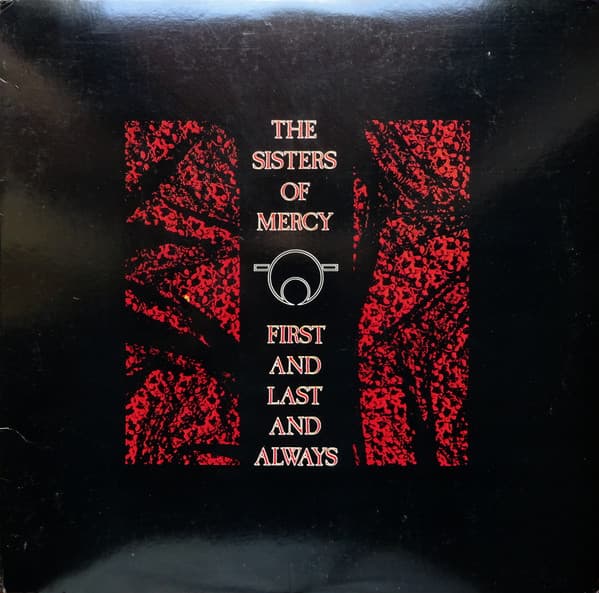
The Sisters Of Mercy
First And Last And Always
1985
The Leeds template going major-label: Doktor Avalanche's machine pulse under Hussey's chiming guitar, recorded as the band was coming apart.
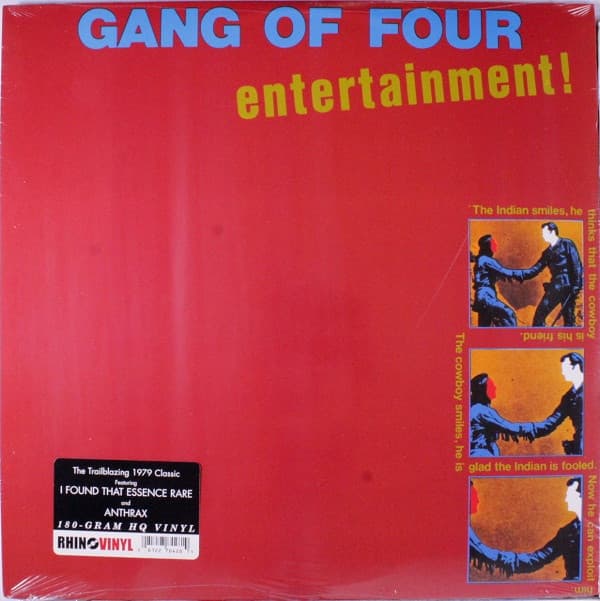
Gang Of Four
Entertainment!
1979
Art-school funk with the guitar used as percussion and the bass doing melodic work — the Leeds record everyone else reacted against or stole from.
Red Lorry Yellow Lorry
Talk About The Weather
1985
Recorded at Spaceward in Ely, out on Red Rhino, it sat on the NME indie albums chart for months and peaked at No. 3; eight tracks, 27 minutes, no let-up.
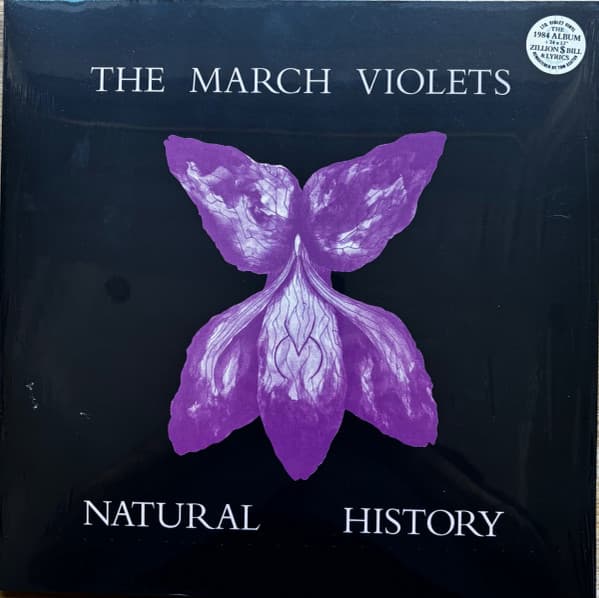
The March Violets
Natural History
1984
Not an album — October 1984, collecting the first four singles plus two tracks from a 1983 Peel session, including the floor record "Snake Dance". Two vocalists, male and female, trading lines.