Norwegian Black Metal
Four-track hiss, tremolo guitar as weather, and a Bergen studio that made cold sound like architecture.
What you're really asking
You're asking about a sound, but the scene was mostly a handful of teenagers in two cities who agreed on a set of refusals: no groove, no solos, no clean production, no American death metal palm-mutes.
What they kept instead was tremolo guitar played as a single sustained chord-wash, blastbeats used as texture rather than impact, and vocals pushed to the back of the mix. The records were made for almost no money and sold in the hundreds at first — the mythology arrived later, and the tape hiss came as standard.
Where it sits
Two poles. Oslo: Euronymous of Mayhem ran the shop Helvete in Schweigaards gate from 1991 to 1993, and the label Deathlike Silence Productions out of it.
Bergen: Grieghallen studio, where engineer Eirik "Pytten" Hundvin — a man with no stake in the genre — recorded Immortal, Emperor, Burzum, Gorgoroth and Enslaved, and gave the scene its thin, glassy mid-range.
Between April 1991 (Dead's suicide) and August 1993 (Euronymous stabbed to death by Varg Vikernes) the circle produced the church arsons, the court cases, and the records in roughly the same eighteen months.
English and French labels carried it out: Peaceville, Candlelight, Osmose, Misanthropy. Norwegian ones followed — Satyr's Moonfog from 1993, Metalion's Head Not Found.
By 1996 the sound was a global export and half the founders were in prison or dead.
The scene
Who: Euronymous, Hellhammer, Fenriz and Nocturno Culto, Ihsahn and Samoth, Abbath and Demonaz, Garm, Satyr. Places: Helvete's basement, Grieghallen, and Fenriz's four-track in a flat.
What: fast tempos with no acceleration, riffs built from two or three repeated intervals, synth used as a drone bed rather than melody, Norwegian or archaic Dano-Norwegian lyrics. How a record got in: self-recorded or Pytten-recorded, mixed so the guitars blur into one tone, released on a label run by someone in the scene, and sleeved in black-and-white — often a blurry forest, a ruin, or a band member in corpse paint shot on cheap film.
The leading records
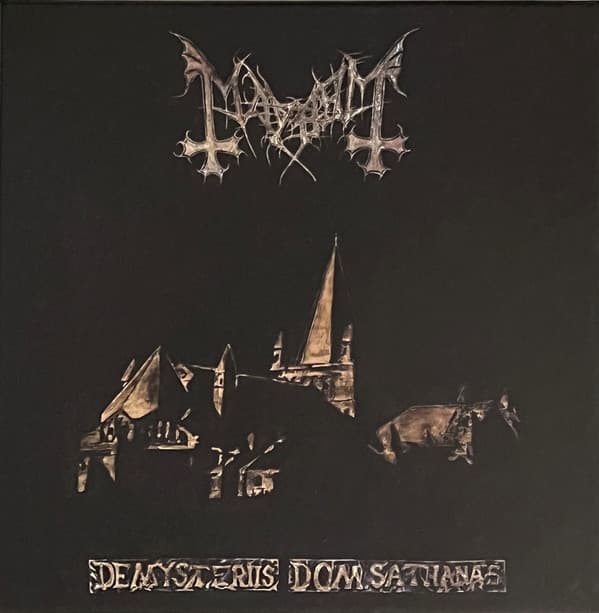
Mayhem
De Mysteriis Dom Sathanas
1994
Tracked 1992–93, released on Euronymous' own Deathlike Silence after his death; Attila Csihar flew in from Hungary to sing it, and the bass credit has been disputed by the surviving members ever since.

Darkthrone
Transilvanian Hunger
1994
Fenriz cut it himself on a four-track with no studio involved; Vikernes wrote four of the eight lyrics, and Peaceville put out a record that sounds like a rehearsal tape by design.
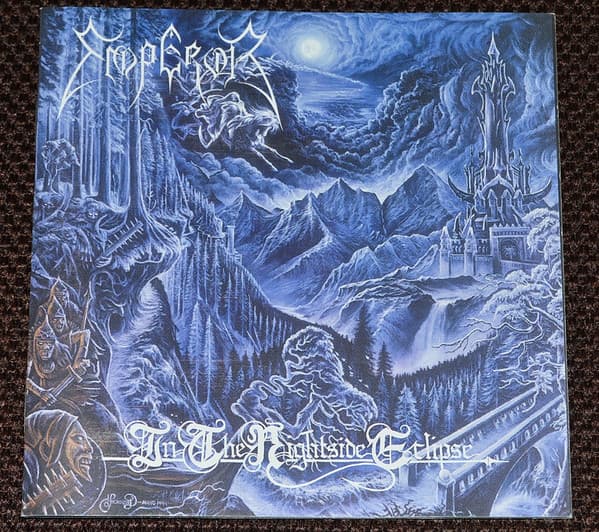
Emperor
In The Nightside Eclipse
1994
Grieghallen, 1993: keyboards treated as a second guitar section rather than decoration. Recorded while the drummer and guitarist were facing charges for murder and arson respectively.
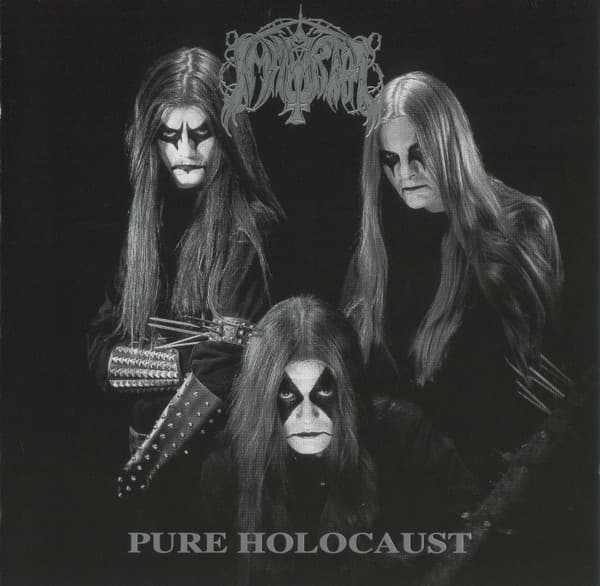
Immortal
Pure Holocaust
1993
Abbath handled bass and drums, Demonaz the guitars; the tempos sit above almost everything in the scene and the lyrics abandon Satan entirely for the invented winter kingdom Blashyrkh.
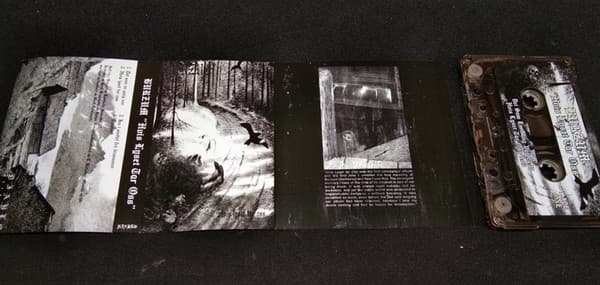
Burzum
Hvis Lyset Tar Oss
1994
Four tracks, one of them an all-synth piece with no guitars — the point where the scene's minimalism crossed into ambient and dragged a generation of bedroom projects with it.
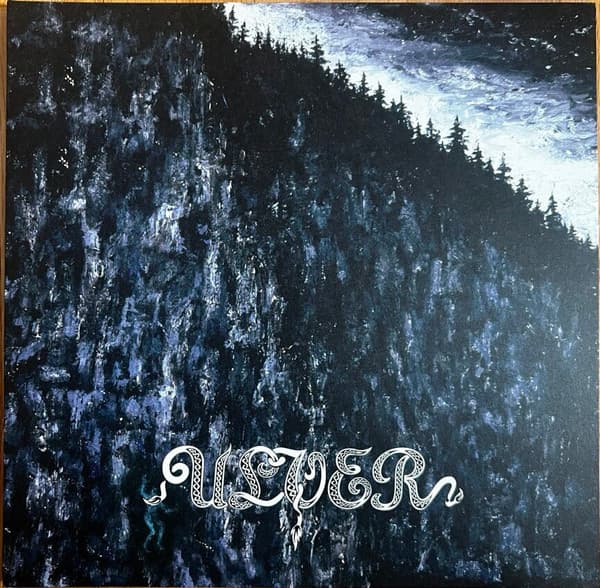
Ulver
Bergtatt – Et Eeventyr I 5 Capitler
1995
Recorded at Endless Lydstudio in Oslo in late 1994 and issued on Head Not Found, with clean choral singing and Norwegian folktale lyrics sitting inside the blastbeats.
Oddballs
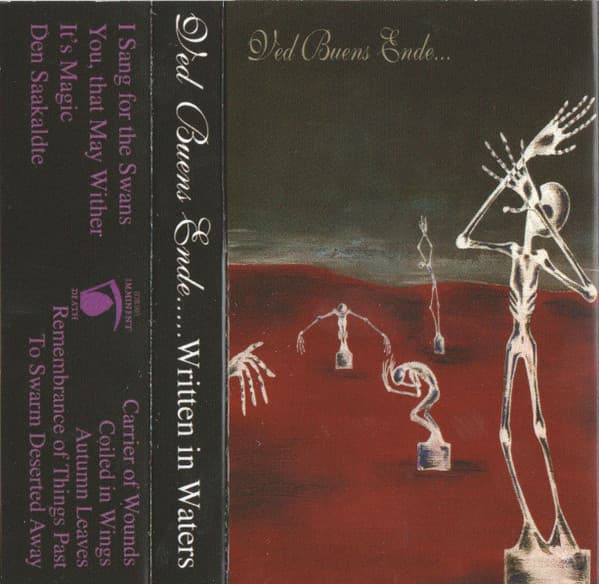
Ved Buens Ende
Written In Waters
1995
Carl-Michael Eide plays jazz-adjacent chord voicings and crooning vocals over black metal drums; the record sat in the Misanthropy catalogue next to Burzum and sounds like neither.
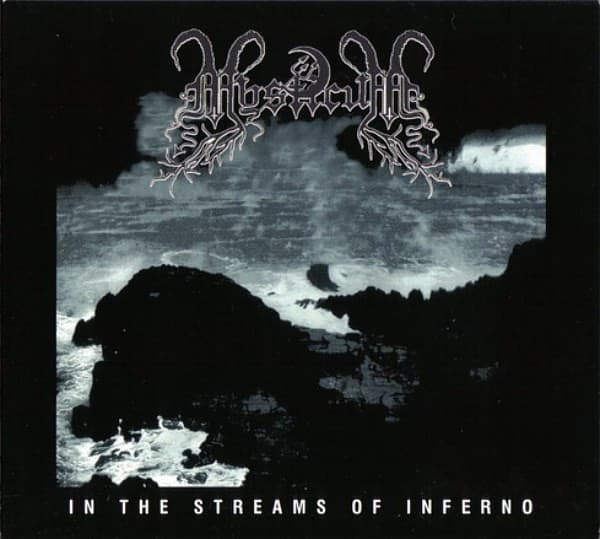
Mysticum
In The Streams Of Inferno
1996
Originally signed to Deathlike Silence, their album went unreleased when Euronymous died; it finally arrived built on drum machine and synth, with Hellhammer briefly in the line-up.
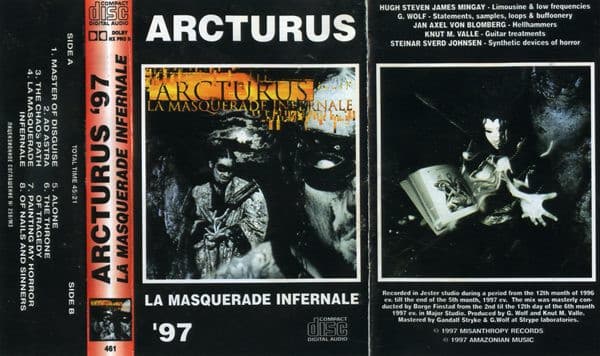
Arcturus
La Masquerade Infernale
1997
Garm and Hellhammer with vibraphone, strings and theatrical vocals — proof that by 1997 the Oslo players had started treating black metal as raw material rather than a rulebook.
Keep digging
- What did Pytten actually do at Grieghallen?
- Which Deathlike Silence originals still surface?
- Where does the Swedish sound diverge?