San Diego Post-Hardcore
Hardcore pulled apart at the seams: screamed vocals, spray-painted sleeves, bands that lasted two years each.
What you're really asking
You're asking about a five-year window in one city where hardcore stopped being about discipline and started being about collapse. Same tempos, same basements — but the vocals shredded, the guitars went dissonant and angular, and the songs refused to resolve.
It is also a label story: Gravity Records developed the "San Diego sound" — post-hardcore with loose, chaotic musicianship and vocals, and the records look as hand-made as they sound.
Where it sits
San Diego, 1991 onward. Gravity Records was founded in 1991 by Matt Anderson of Heroin, first to release his own band and then other local groups.
Gravity's first catalog number was Heroin's 1992 7-inch; some later white-label pressings had photographs glued to the labels. Heroin is the band generally cited as pioneering screamo or inspiring its earliest acts, alongside Antioch Arrow and Swing Kids.
Aaron Montaigne later credited the bands' influences to Revolution Summer-era DC, the Birthday Party, and the vocal style of San Francisco's Fuel. A second label followed: Justin Pearson's Three One G, named after the chorus of Joy Division's "Warsaw," opened in 1994 with an Unbroken single.
The sound then jumped coasts, developed in the late 1990s by Pg. 99, Orchid and Saetia.
The scene
Who: Anderson at Gravity, Montaigne fronting Antioch Arrow after drumming had passed between him and Ron Avila in Heroin, Pearson, Brady, Palafox and Eric Allen in Swing Kids, Mario Rubalcaba drumming Clikatat Ikatowi between 411, Rocket From The Crypt and Hot Snakes.
Rooms: the Che Café and whatever basement would take an all-ages bill. What: short records, odd time signatures, angular guitar leaning on octaves and dissonance, shouted vocals.
How a record gets in: the sleeve is handled. Antioch Arrow's debut came in spray-painted chipboard with art lifted from the poster for The Man with the Golden Arm, and a secret run of translucent red copies.
The leading records
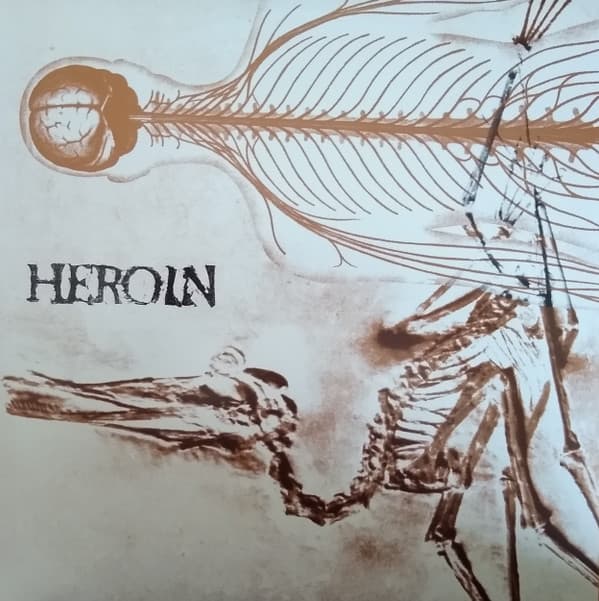
Heroin
Heroin
1997
The Gravity CD discography that gathered the 7-inches — most people meet the band through this, not the singles.
Antioch Arrow
In Love with Jetts
1994
Fourteen minutes, first record with Andy Ward and Jeff Winterberg, repressed in 1997 with different artwork.

Swing Kids
Swing Kids
1995
Four originals plus a harsh "Warsaw" — the cover that gave Pearson's label its name.
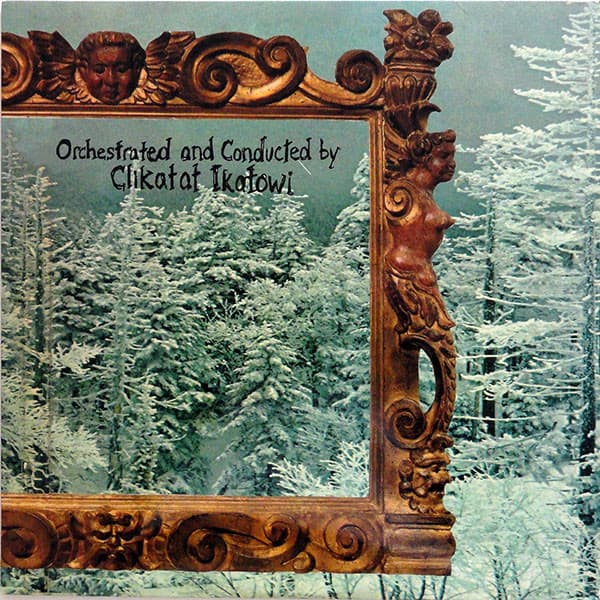
Clikatat Ikatowi
Orchestrated and Conducted By...
1996
Gravity 19, pressed on CD and vinyl with a limited hot-pink LP run; the jazz-trained end of the scene.
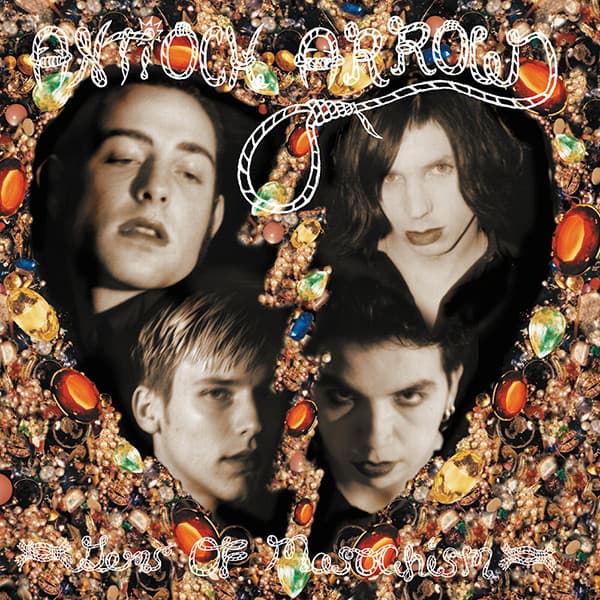
Antioch Arrow
Gems of Masochism
1995
Posthumous, recorded December 1994, and a full move from spastic hardcore into keyboard-driven gothic post-punk.
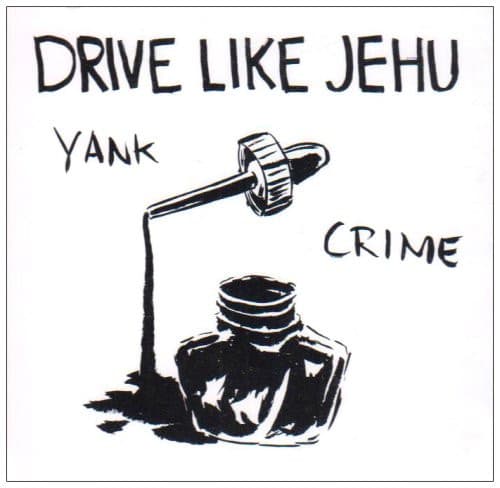
Drive Like Jehu
Yank Crime
1994
The other San Diego — long-form, interlocking twin guitars, major-label distribution while Gravity was silk-screening sleeves.
Oddballs
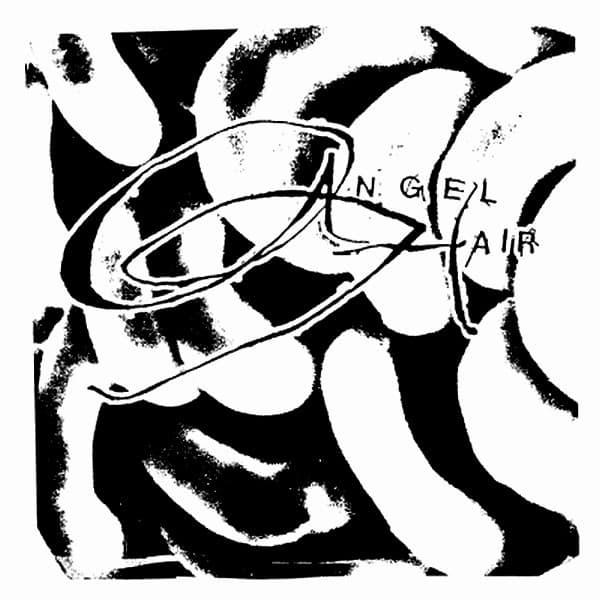
Angel Hair
Insect Mortality
1995
A Boulder band on Gravity, filed under the San Diego sound anyway; roughly 100 copies came in silk-screened sleeves.
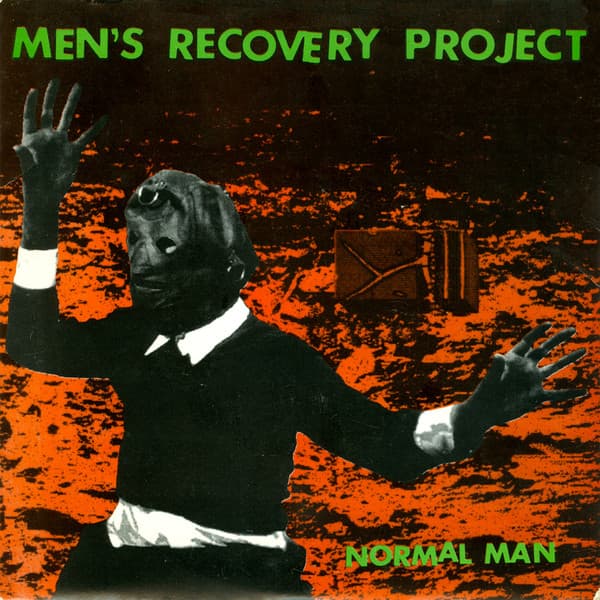
Men's Recovery Project
Normal Man
1995
A Gravity 7-inch from 1995 of deadpan absurdity — proof the label signed attitude, not tempo.
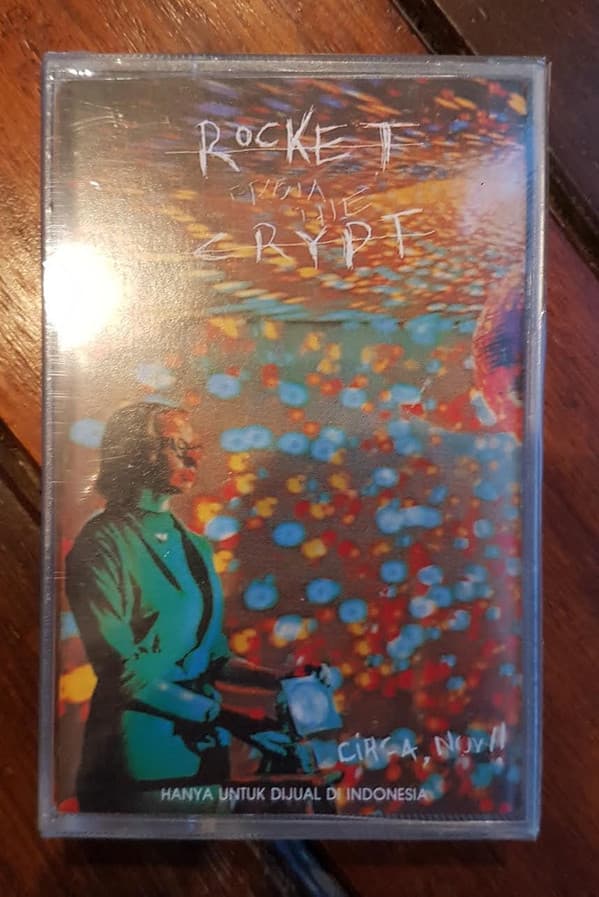
Rocket From The Crypt
Circa: Now!
1992
Horns, pompadours and matching suits in the same city, same year as Gravity 1 — and Rubalcaba ended up in both worlds.
Keep digging
- Which Gravity sleeves were hand-made?
- What did the Numero reissues actually change?
- How did this reach Virginia and New York?